
A Cold War “Missile Gap,” Spy Satellites & the Bulova Watch Company
American Presidential elections are nearly always fraught with controversy – a challenger frequently will allege the incumbent has left the United States “weak” through inaction or unwise decisions via-a-vis an American foreign adversary (or three). Some claims are legitimate, some not. On occasion, the Presidential incumbent knows the challenger’s claims are false by way of highly classified U.S. intelligence sources but can’t disclose the information for fear of exposing the source, which would, ironically, weaken the country. And sometimes, the challenger is assisted in their pursuit of Presidential Office by a foreign adversary. One of the strongest examples of this was during the 20th century’s most dramatic paradigm shift in the gathering of foreign intelligence – satellite imagery reconnaissance.
One of several highly classified (at the time) satellite reconnaissance programs, America’s CORONA imagery spy satellite program created a strong demand and dependency for satellite imagery in the U.S. Government’s (USG) Intelligence Community (IC).[1] Beginning in the 1950s, the race was on for faster, better quality, and increased volumes of imagery (which has continued up to the present day).[2] Satellite imagery became essential to national survival, stabilized a nuclear crisis during the 1960s (with both sides - the U.S. and the Soviet Union - commanding large nuclear arsenals that gave international relations an apocalyptic dimension), with the satellites rendering invaluable assistance to the USG and its Western allies in winning the Cold War.
Only declassified by President William Jefferson Clinton in early 1995, CORONA was a closely guarded Cold War secret during the 1950’s and 1960’s. President Eisenhower – with his WWII strategic military experience – understood the significance and necessity of accurate and timely intelligence during times of war, and he gave his required endorsement for initial CORONA efforts in 1958. From its first mission in August 1960 to its replacement with greatly improved cameras in 1972, CORONA was a revolution for intelligence, expanding intelligence gathering activities from airborne platforms, such as Lockheed's U-2 “Dragon Lady” at altitudes of hundreds of thousands of feet above the ground, to satellites operating in geo-synchronous orbit in outer space.

An unlikely player involved in the research and development evolution in intelligence gathering represented by satellite imagery? Bulova Watch Company. And we dug into formerly highly classified Central Intelligence Agency (CIA) documents - declassified via Freedom of Information Act requests - to explore this relationship between Bulova and the then highly classified CORONA KEYHOLE spy satellite program.


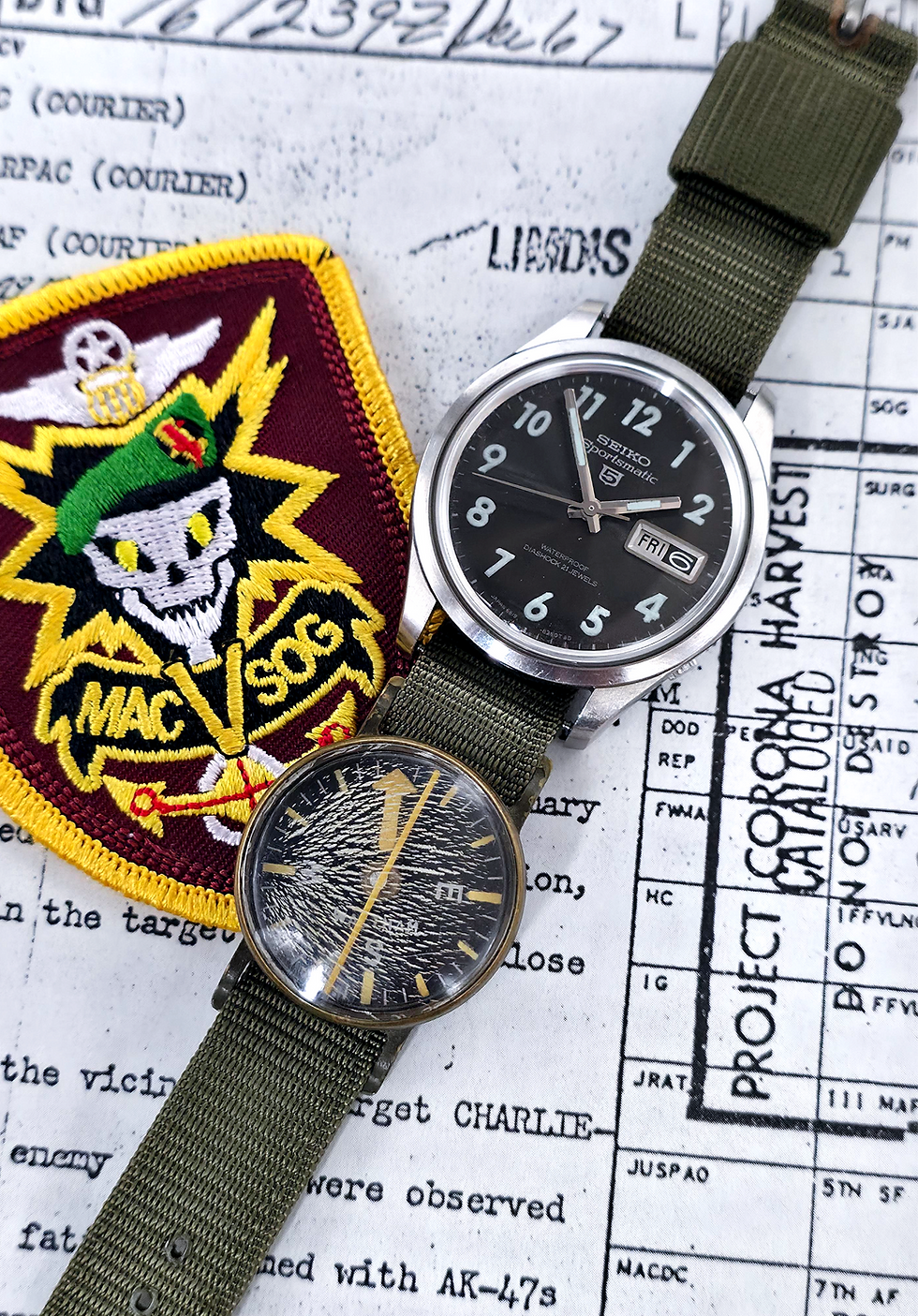


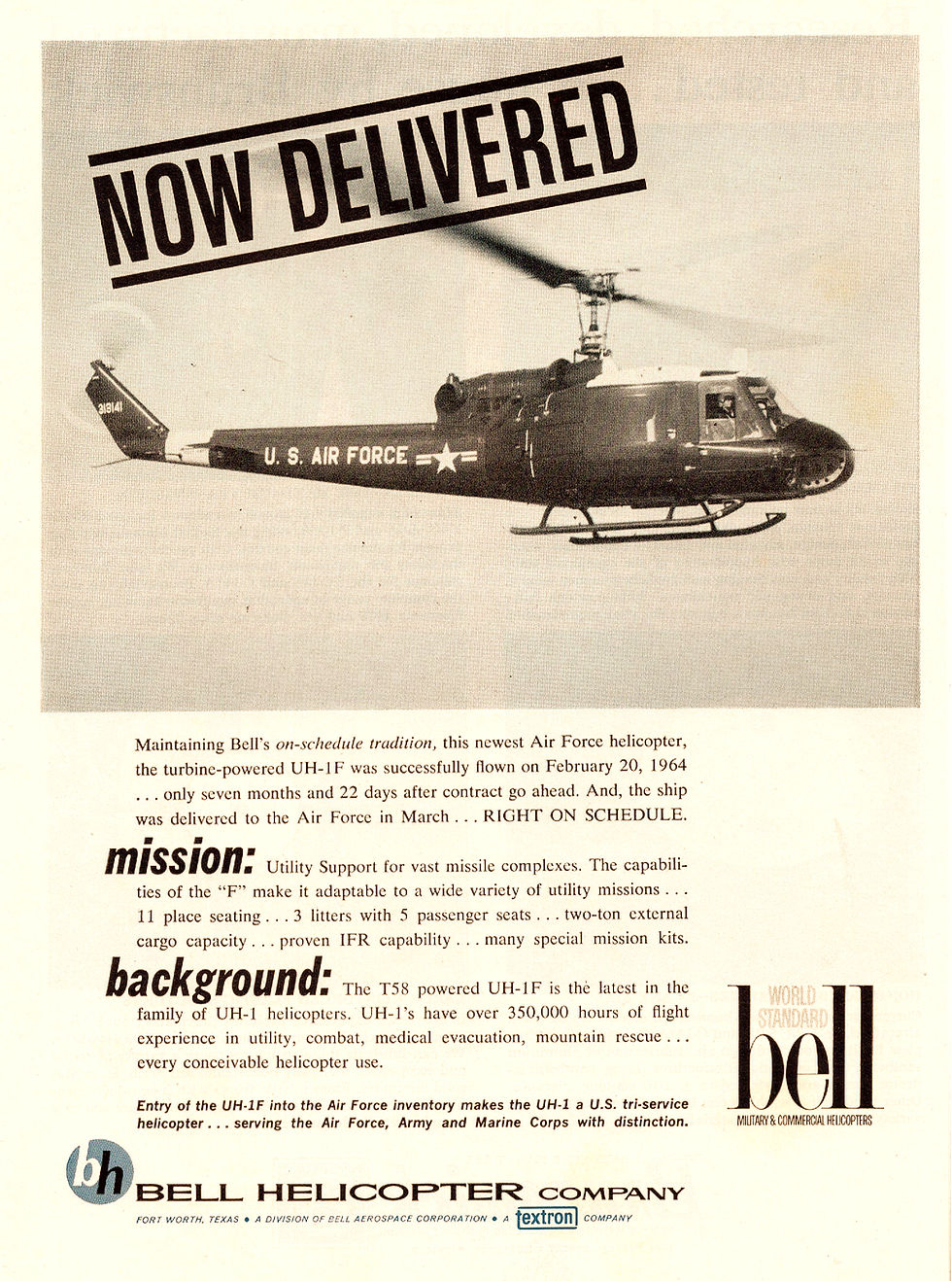


A Cold War Heating Up
Shortly after the second Eisenhower Administration (1957-1961), Democrats (led by Senator John F. Kennedy) capitalized on the fear spread by the Soviet Union’s technical prowess demonstrated by the successful launch of the world’s first satellite, Sputnik, into geosynchronous orbit on October 4, 1957. The American public was shocked - most had assumed the Soviet Union to be technically inferior, but it had just beat the U.S. into outer space. Panic soon replaced shock, as Americans soon realized the next logical application of new space technology was weaponry, in the form of offensive missiles with ranges exceeding 6,000 miles tipped with nuclear warheads. Preparing for his Presidential run by challenging President Eisenhower, Kennedy coined the term “missile gap” to allege the USG had fallen militarily behind the Soviet Union, citing the inability of the USG to respond to the Sputnik launch.
In the decade before, the USG and Soviet Union had each worked at a feverish pace to supplement their respective strategic bombers while developing more survivable nuclear weapons delivery systems – ie: intercontinental ballistic missiles (ICBMs) and intermediate-range ballistic missiles (IRBMs). At the same time, a sense of doom pervaded America as images of nuclear destruction released following U.S. and Soviet nuclear tests saturated society and served as catalyst for conversation over dinner and the water cooler. Americans prepared for the worst, in particular following the Soviet detonation of their first thermonuclear device in August 1953 and its first successful test of an ICBM in late 1957; black and yellow nuclear fallout shelters proliferated throughout American cities while the U.S. Office of Civil Defense (CCD)-issued booklets on constructing family fallout shelters and grade school students were taught to “duck and cover” under their desks for protection if a nuclear denotation occurred (find our article on the U.S. Office of Civil Defense and their watches in “The Stories” dropdown).
Citing the missile used in the Soviet launch of Sputnik, Kennedy claimed the Soviet Union was overtaking the U.S. in the manufacture of ballistic missiles at a rapid pace, claiming, “the nation was losing the satellite-missile race with the Soviet Union because of…complacent miscalculations, penny-pinching, budget cutbacks, incredibly confused mismanagement, and wasteful rivalries and jealousies.”

Joining in, the Soviet Union capitalized on Kennedy’s accusations to scare the American public with exaggerated claims of Soviet military capabilities, claiming in late 1958 that, “Soviet ICBMs are at present in mass production.”
Five days later, Soviet Premier Nikita Khrushchev boasted to the world of Soviet success in the testing of an ICBM with an 8,000-mile (13,000 km) range. Similar USG efforts had resulted in a failed launch the same month, adding to a sense of Soviet superiority in missile technology, production numbers, and capabilities.
The allegations were one of the main planks in Kennedy’s ongoing election campaign rhetoric that sought to portray President Eisenhower (and by default, the Republican party) as weak on defense.
Eisenhower’s policy of reliance upon nuclear weaponry to allow large USG military reductions following the conclusion of the Korean War, accompanied by a long-term Administration strategy to promote collective security via the North Atlantic Treaty Organization (NATO) in Europe and throughout the world only made this easier for Kennedy.
An OXCART and Bulova
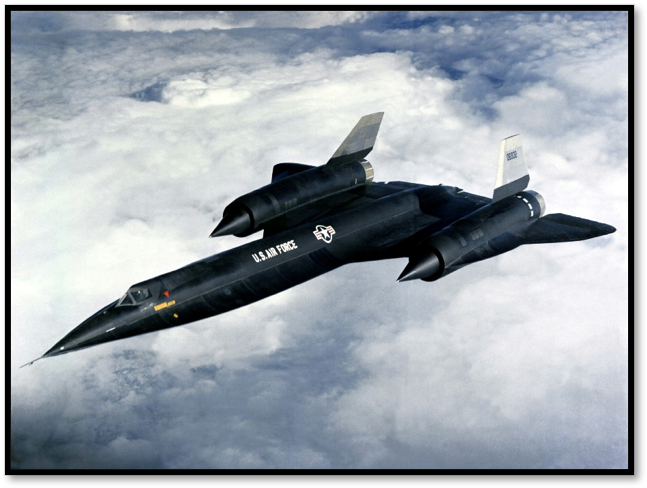
During the run-up to the 1960 Presidential elections, the Eisenhower Administration and the U.S. military (USMIL) sought to take advantage of one area it had a clear superiority in – military aircraft. Two airframes stand out, both designed to fly higher than Soviet surface-to-air missiles (SAMs) could reach: the aforementioned U-2, and Lockheed’s A-12 OXCART, operated by the USMIL and CIA, respectively. The U.S would use both to fly high over the Soviet Union on missions to map out via photography the adversary’s ballistic missile infrastructure to provide imagery to military and CIA analysts tasked with determining the status of the offensive Soviet missile force.
However, U-2 and A-12 flights were risky, as pilot danger increased with each Soviet SAM system improvement (in particular, the SA-2 GUIDELINE SAM system) and the inferior, grainy spy photos taken at severe slanted look angles to allow long range access to Soviet military sites of interest (while a top-down look is best, oblique look angles allow a camera to widen the area observed at the expense of distortion) were not always worth the risk of a diplomatic incident. These factors combined to limit the number of actual U-2 and A-12 flights - the flights were a band-aid to a military wound, not a cure.
The CORONA Program
Concurrent with the development and implementation of the U-2 and A-12 during the 1960’s, the USG military – via a slew of usually Los Angeles-based aerospace defense contractors – were developing their own geosynchronous satellite ability, while exploring the ability to get the images taken back to Earth safely.
The highly classified CIA/USMIL CORONA program was hidden within a program code named DISCOVERER. DISCOVERER's cover story was that the program was an effort to explore the ability of man to live in space, via the development of “life-sustaining compartments, within which small animals could travel to earth orb it and, after the mission was complete, return safely to earth.”[3]
CORONA was nestled within DISCOVERER to focus the latter's real innovations allowing space-based overhead photography, or imagery, to be taken on traditional film while in orbit with the film then ejected from orbit to Earth. As the film re-entered the atmosphere, the U.S. Navy would recover it and process the film at ground-based processing facilities, supplying it CIA’s National Photographic Interpretation Center (NPIC) intelligence analysts for exploitation.[4] Examined through high-powered optics on light tables, analysts scoured the imagery in the hopes of answering intelligence gaps vis-à-vis the militaries of the Soviet Union and its Warsaw Pact military allies. [5]
Bulova Watch Company and the U.S. Intelligence / Military-Industrial Complex
During World War II, Bulova – like many U.S.-based watch manufacturers – was employed by the USG to utilize their fine-tuned precision skillsets to manufacture military items like bomb fuses, bomber optics, and more. Following Axis Power defeat and the end of the war, many American watch manufacturers returned to watches but also retained lucrative USG contracts with the Department of Defense.

Bulova was one such watch manufacturer, which – per Cold War-era Bulova Annual Reports – thrived in this era as the Cold War was heating up. And the American watchmaker was hardly alone. Before the fall of the Berlin Wall, a mere six percent of the U.S. defense budget went to specialist weapons makers (ie: a U.S. company that solely made weaponry). [6]
The majority of the era's defense contracts went to companies that served both defense and commercial markets – General Mills made cereal and cookies, but also ICBM guidance systems. Related, automotive giant Ford also made automobiles, but also satellites and a range of other weapons systems until 1990. Yet fast forward to the present day, and specialist defense contractors account for an outsized 86% of U.S. defense spending.
In 1952, the USG awarded Bulova defense contracts totaling over $30 million (nearly $380 million today, adjusted for inflation), per Bulova Stockholder Reports from that year. [7] These contracts included the manufacture of “aircraft instruments, precision ordnance, critical fuzes, and certain other important devices. We have also been asked to undertake an extensive program of scientific research and engineering development for the military agencies of the government.”
By the mid-1950s, the watch company's annual sales had reached $80 million (over $1 billion today), with USG contracts counting for a substantial portion of this. In 1954, Bulova’s Chairman of the Board Arde Bulova hired World War II hero General Omar Bradley as chairman of Bulova Research & Development Laboratories, Inc., a wholly owned subsidiary involved in developing the company's defense product business.
Bradley, a close war-time friend of Harry D. Henshel, Arde Bulova's brother-in-law and one of the company's largest shareholders, was responsible for strategic policy guidance in the Lab’s research and development in physics, chemistry, mathematics, and electronics – one of his specific responsibilities was “[to try] to find out what research problems bother the Pentagon and take them back to Bulova.” [8] When Arde Bulova died in 1958, Bradley – who himself wore a Bulova Accutron watch [9] – was the logical choice to take over the chairmanship of Bulova.


Under Bradley’s leadership, Bulova focused its Department of Defense efforts into two main areas: Bulova Electronics (in particular its revolutionary tuning form-powered Accutron precision movements) and the aforementioned Bulova Research & Development Laboratory.
Bulova Electronics focused on frequency control components, the electronic timekeepers of complicated missile and military communications equipment, while its Research and Development department developed safety mechanisms, as well as warhead arming systems and fuse mechanisms for U.S. Navy and Army missiles for use in a range of missiles, from the solid-fueled Pershing medium-range ballistic missile (MRBM) to the still widely-used AIM-9 Sidewinder air-to-air missile; as of 1959, Bulova products were used in 17 of 40 U.S. military missile programs.
Between the mid- and late 1950s, Bulova had more than doubled its staff within the two divisions, “to keep pace with broadened areas of interest in research and development for military…customers.” Under Bradley, its Research & Development Laboratory began, “…producing mechanisms of the most complex and delicate nature for our national arsenal – detection devices for guided missiles, mortar fuzes, mine detectors, complicated torpedo-head assemblies, quartz crystals, and certain devices which are classified as secret by the Department of Defense.” [10]
Per our research into now declassified (but previously highly classified) early Cold War-era CIA documents, Bulova research efforts were often cited in larger analytic works, to include those related to missile technology. [11]
Importantly, Bulova efforts included research on specialized military cameras to include photographic reconnaissance – perfect for use in nascent imagery spy satellites. To wit, in 1959, Bulova would note in its annual reports that, “Many of the [Bulova Research & Development] Laboratory’s unique techniques and capabilities are proving valuable to the civilian and military space exploration programs…[Bulova efforts in] photographic reconnaissance have been utilized for rocket and satellite programs during the year, and are being developed and adapted for newer programs.”
Bulova and the CORONA Program
One of the first mentions of Bulova vis-à-vis the highly classified CORONA program comes at the inception of the program in 1955, when Bulova was mentioned in declassified Agency documents regarding camera requirements and existing cameras being considered presumably for planned imagery satellites. [12]

Less than two years subsequent, in April 1957, CIA brought in Bulova and other contractors for a routine discussion on the progress of the CORONA program, presumably to Agency Headquarters in Langley, VA, per declassified CIA documents. [13] During the meeting, imagery satellite camera lenses were discussed – “Each lens selected from stock and the manufacturer will supply lenses selected with regards to resolution and definition capabilities. These lenses will again be checked by Bulova by means of a collimator and nodal slide system…Any lens failing tests will be rejected and returned to manufacturer for compliance.”

Further meetings between the CIA and Bulova were held to determine lenses and other aspects of the CORONA program, part of an effort to develop “camera[s] to continuously operate without changing film…[for] one year, 135 days, day and night” for the U.S. spy satellite program. [14] As late as October 1959, Bulova remained involved in the CORONA program, engineering and constructing cameras for use in CORONA satellites.
CORONA’s Impact on the “Missile Gap”
Much attention has been paid in watch aficionado circles to Bulova Accutron Astronaut electric watches worn by the aforementioned high-flying U-2 and A-12 spy planes that preceded the CORONA program – in particular by Hodinkee [15] and Watches of Espionage [16] – as it should be. The watches and airframes - and the brave pilots overflying the Soviet Union in the latter - represented huge leaps in technology and engineering at the time.

That said, the first CORONA mission alone – completed in August 1960 – returned more imagery than all previous U-2 missions combined,. with none of the attendant risk. CORONA missions as such, given their position in outer space, weren’t subject to political considerations. When U-2 pilot Francis Gary Powers was shot down over Soviet territory in May 1960, it led to a White House-ordered cessation of U-2 flights and a subsequent gap in imagery required for intelligence assessments. No additional flights were approved by the White House before CORONA’s inaugural mission in August that same year, a massive impairment to analysts attempting to gather more intelligence on Soviet missile program progress.
In addition to the Soviet missile program, CIA NPIC analysts used spy plane and spy satellite imagery to determine the locations of major airfields and military installations, and to further identify types and numbers of airframes, main battle tanks, and heavy movers (tractor trailer tank transports). More important, the addition of satellite imagery allowed analysts to develop and hone imagery signatures for Soviet military installations to guide future identifications of newly-built installations in subsequent missions.
To this point, and as noted by NPIC analyst David Doyle, “Because the Soviets liked to build their facilities uniformly, a certain pattern in trees or snow was easy to read. When the Soviets prepared a new location for a new missile silo, the first thing to appear was a new rail complex with lots of sidings. Flattened snow and pegs in a pattern marked survey work, and fences cutting through the forest always surrounded launch sites. It allowed us to know where the silo would be before they ever dug a shovel of dirt…For example, surface-to-air missile sites had different designs than launch areas for ICBMs.” [17]

The third CORONA mission, flown in June 1961, was revelatory for analysts. Again, per NPIC analyst Doyle, “We had clear imagery over the Western Soviet Union for the first time. We saw the first intercontinental ballistic missile and medium-range missile bases and started to catalog them. It was obvious the Soviets had started building bases and production facilities but that almost no missiles were operational. By June of 1961, we had put to rest the whole missile gap argument.”

Following the new discoveries – or lack thereof – of Soviet missile bases, CIA officers briefed Eisenhower on their findings. Senior CIA officer and NPIC founding member Dino Brugioni recounted the officers, “showed the President his first pictures of three missile launch sites ‘under construction’…we emphasized those very words, ‘under construction.’ "
"In January 1961, before leaving office, Eisenhower knew that he was almost home free, there was no missile gap, there never had been, and there might never be. The photos revealed all of the missile production facilities to be under construction, with almost no missiles completed. It just blew the whole missile gap away. Estimates predicted the Soviet Union contained 250 ICBM launch sites, when instead there were only about a dozen.”
A new intelligence estimate was published in September 1961 and included a wealth of new photographic evidence derived from CORONA spy satellites. The estimate read, “New information, providing a much firmer base of estimates on the Soviet long range ballistic missiles, has caused a sharp downward revision of our estimates of Soviet ICBM strength…now in the range of ten to twenty-five launchers from which missiles can be fired at the United States and that force level will not increase markedly during the months immediately ahead.”
President Eisenhower knew now, beyond a shadow of a doubt, that Kennedy's accusations were false.

Where there had previously been Agency estimates of nearly 250 Soviet ICBMs on launchers by mid-1961, the revised estimate – incorporating CORONA satellite imagery – lowered this ICBM number dramatically to a mere handful. Countering this on the U.S. side? More than 100 land and sea-based nuclear warhead-capable missiles forward deployed on NATO states bordering the Soviet Union’s borders and on U.S. submarines, respectively.
The imagery taken by CORONA satellites (code-named KEYHOLE or KH) – coupled with CIA recruited source, Colonel Oleg Penkovskiy (with his access at the upper levels of the Soviet Ministry of Defense) reporting in 1961 that senior Soviet generals believed the initial Soviet ICBM was unsuccessful – provided NPIC and IC intelligence assessments with corroborated intelligence and confidence analysts needed to persuade the White House the feared missile gap simply didn’t exist.
But this didn’t stop Kennedy from using the public’s perception otherwise against the Republican Party’s candidate, Richard Nixon, in the election – and Eisenhower would not be the one to reveal what he knew otherwise to the American public and the world.
Conclusion
Bulova, Lockheed, GE, Kodak and other DoD/CIA defense contractors would continually make improvements to the CORONA satellites, resulting in better quality imagery and longer orbits. NPIC analysts augmented their imagery analysis skill sets continuously, building upon lessons learned from the first CORONA missions that disproved the existence of a missile gap, which, in turn, also led to stability between the two superpowers as the Cold War continued. Before CORONA’s first mission in mid-1960, less than 25 percent of the world had been photographed or mapped – when CORONA flew its last mission in 1972, 75 to 80 percent of the world had been, thanks to the program's KEYHOLE satellites.
And JFK? Declassified documents would later reveal Kennedy was informed of the actual situation during the campaign, which led scholars to question what Kennedy knew and when he knew it. There has been speculation Kennedy was aware of the illusory nature of the missile gap from the start and he was using it solely as a political tool. If so, whipping up Soviet nuclear-tipped missile hysteria worked nicely – partly due to his portrayal of Republicans as weak on national security, he succeeded in winning the Presidency.
Post-Script: CORONA, the Cuban Missile Crisis, and Nuclear Arms Limitation Treaties
During the late 1950s, communism made strident gains in the Western Hemisphere; although initially the U.S. cautiously welcomed Fidel Castro’s seizure of power in Cuba, the revolutionary rapidly revealed he was firmly within the Soviet orbit – by January 1961, the U.S. Government had severed diplomatic relations with Cuba. Related, and as noted previously, initial CORONA missions in 1960 and 1961 had resulted in sizable increases in imagery, allowing NPIC analysts to establish imagery signatures for a wide variety of Soviet military installations, to include nuclear weapons facilities.
The nuclear ICBM genie may have been let out of the bottle, but so had the spy satellite (ironically launched into orbit by the same missiles that would carry nuclear warheads during a future conflict).
When CIA analysts examined imagery of Cuba as tensions between the Soviet ally and the U.S. continued to rise, NPIC analysts used the knowledge gained from previous CORONA missions to discover the infamous nuclear warhead-cable missile launch sites in Cuba, still under construction. Per NPIC analyst Doyle, “When U-2 missions brought back imagery of Soviet installations on Cuba, interpreters used the knowledge gained from CORONOA. It was instrumental in knowing what was going on in Cuba."
As the 1960s progressed, the CORONA program provided imagery required by the IC to assess the Chinese nuclear program, beginning with the satellite imagery of the Chinese nuclear testing site at Lop Nor in late 1961. By 1964, the program confirmed the Soviet Union was developing and deploying its first multiple independently targetable re-entry vehicle (MIRV) ICBM, the SS-9 SCARP, with a range of nearly 10,000 miles and the ability to carry three separate nuclear warheads.


America’s spy satellites were an invaluable part of U.S. nuclear arms limitation treaty efforts during the Cold War, which succeeded in lowering tensions between the two super power rivals. In the contemporary era, spy satellites are not only operated by governments but have also proliferated widely in the private sector – and Bulova played a role in the start of it all.
A fun bonus discovered during the research in USG declassified archives? In 1976, the CIA gifted Bulova Accutron watches to individuals redacted in Agency records (presumably sensitive foreign government officials), along with bicentennial medallions celebrating America’s 1776 founding.
1. CIA, “Penetrating the Iron Curtain: Resolving the Missile Gap with Technology,” https://www.cia.gov/static/9f19eaafd0a610481c2b4fd980b407fb/Penetrating-the-Iron-Curtain-Resolving-the-Missile-Gap-with-Technology.pdf
2. This continued during my early days of my own career within the IC’s National Geospatial-Intelligence Agency (NGA) as a military analyst.
3. National Reconnaissance Office, “Intelligence Revolution 1960: Retrieving the CORONA Imagery that Helped Win the Cold War,” APR/2012, https://www.nro.gov/Portals/135/documents/history/csnr/corona/Intel_Revolution_Web.pdf
4. NPIC would eventually evolve into the National Geospatial-Intelligence Agency (NGA), which is now part of the Department of Defense. NGA is part spy agency, part combat support agency; it was formed from NPIC's successor agency, the National Imagery and Mapping Agency (NIMA) in 2003 to bring together institutions that mapped the world and its wars, it answers to the DoD and the Intelligence Community. NGA is responsible for pouring over imagery produced by some of the USG’s most highly classified spy satellites and to ensure U.S. military forces and IC agencies are kept situationally aware of military developments. NGA started – and in many ways continues to be – low key. In his first year in office, President Barack Obama visited a D.C. Five Guys across from NGA’s Building 213 in the Navy Yard (where I was working at the same time) and spoke to a customer that worked at NGA; during the conversation, with cameras rolling, it quickly became obvious Obama had little awareness of NGA.
5. My initial imagery analyst training was on the same light tables, before transitioning fully to computers; some missions continued to use hard copy films, ensuring most offices had at least one light table in a neglected corner.
6. The Economist, “Supremacy in Jeopardy,” 15/FEB/2025
7. Bulova, “Annual Stockholders Report,” 31/MAR/1952, https://mybulova.com/sites/default/files/bulova-annual-reports/1952AnnualReport.pdf
8. Firordwelek, “Brass in Business: Gen. Ridgway Next?” 12/MAY/1955.
9. Hodinkee, “Found: Five Star General Omar Bradley’s Special Bulova Accutron,” 04/JUL/2017, https://www.hodinkee.com/articles/five-star-general-omar-bradley-special-bulova-accutron
10. Ibid.
11. CIA, “Provisional Intelligence Report: Cost and Requirements for Production of Gyroscopes for a Guided Missile Program in the USSR,” 12/SEP/1956, declassified 09/AUG/1999.
12. CIA, “TIME LAPSE CAMERA, 35mm,” 22/JUL/1955, declassified 14/FEB/2012 as CIA-RDP78-03172A000300020002-6
13. CIA, “SUBJECT: P-125D – Contract No. RD-113 – Task III 35mm Time Lapse Camera,” 11/APR/1957, declassified 14/FEB/2012 as CIA-RDP78-03172A000300020021-5
14. Ibid.
15. Hodinkee, “In-Depth: Bulova’s Accutron Astronaut – The Watch Chosen by the CIA for Pilots of the Fastest Plane Ever Made,” 12/JUN/2017, https://www.hodinkee.com/articles/bulovas-accutron-astronaut-the-watch-chosen-by-the-cia-for-pilots-of-the-fastest-plane-ever-made
16. Watches of Espionage, “The Lasting Legacy of the CIA’s Lockheed A-12 and the Watch that Served It,” 10/JAN/2023, https://www.watchesofespionage.com/blogs/woe-dispatch/the-lasting-legacy-of-the-cia-s-lockheed-a-12-and-the-watch-that-served-it
17. The problem of those not familiar with military stand operating procedures (SOPs) – aka, laymen – being involved with military campaigns continues, and a lengthy passage from “Project Maven,” (Katrina Manson, 2026) on the evolution of artificial intelligence in military targeting during the ongoing Russia/Ukraine war is instructive – “The algorithms had got better at spotting tanks, but there was plenty about war that Silicon Valley’s finest AI vendors still didn’t understand. A major challenge was identifying TELS – transporter erector launchers, Russia’s most common mobile missile launch vehicle. TELs were ‘pretty big deal’ to take out. These strategic weapons systems looked like straightforward trucks, but formed the bedrock of Putin’s war effort, firing S-300 and S-400 missiles at aircraft and targets deep into Ukrainian territory. The typically comprised only a few dozen pixels on a satellite picture taken from far away. But the algorithm makers at Microsoft and elsewhere didn’t know that several TELs typically show up together in a pattern, often fanning out in a semicircle. Keeping vendors at arms’ length from users, sometimes because they lacked the right nationalities and clearances, meant computer scientists couldn’t properly tune their models to find the TELs’ signature pattern.”