
The Continuing UTS Risks of Smart Watches
In mid-2023, Watches of Espionage wrote an article that caught our eyes, “CIA Officers and Apple Watches.” It wasn’t discussing anything splashy, like a military-issued Tudor or Rolex, but a rather nerdier topic on the counterintelligence risks of smart watches, like the Apple Watch:
“One thing we can say is that smart watches are NOT/NOT for intelligence officers. Smart watches, like the Apple Watch, offer significant lifestyle benefits: fitness tracking, optimizing communications, and sleep monitoring. However, for CIA Human Intelligence (HUMINT) collectors who rely on anonymity to securely conduct clandestine operations, the networked device is a counterintelligence (CI) vulnerability and potential opportunity for exploitation. For every benefit the Apple Watch provides, it also comes with a threat…Depending on the applications on the device, much of this data is packaged and sold to third party for targeted advertisement.” [1]
WoE wrote this authoritative advice in mid-2023 and while still quite relevant, the fast pace of technology (along with artificial intelligence advances) means it requires an update – because you don’t have to be a HUMINT officer for smart watches to pose a risk.
An interlude – U.S. Federal Government individuals that work with classified information are nearly always required to do so in something called a Sensitive Compartmented Information Facility (SCIF), a highly secure room, building, or portable enclosure used by the U.S. Government, military, and intelligence employees to safely store, process, and discuss classified intelligence – one of the range of protections a SCIF offers is the blocking of electronic surveillance and prevent electronic devices or computers from emitting detectable signals outside the room. This also means no smart phones and no smart watches inside. And it's frequently the reason many cite for their discovery of mechanical watches, ourselves included.
Why talk about the risks of smart watches now? For years, automated license plate readers (ALPRs) [2] – focused on their namesake, reading license plates, tracking vehicles, but allegedly not the drivers themselves – have been spreading at a rapid pace nationwide.
By far, the ALPR company spreading the fastest is Flock Safety, in the form of ALPR, image recognition, machine learning cameras, and even drone systems [3] throughout the U.S. As of mid-2026, the company operated approximately 120,000 surveillance cameras (out of over at least 115k total in the U.S.[4]) across 6,000 communities in 49 states, and was used by more than 5,000 law enforcement agencies and thousands of private organizations to track vehicles and capture data.


The smart watch connection to this expansion in every-day surveillance? Italian defense conglomerate Leonardo [5] is now marketing a new add-on to ALPRs named SignalTrace, a sensor those in the ubiquitous technical surveillance (UTS) field call a “Bluetooth sniffer [6]” powered by Leonardo’s proprietary (and patented) AI algorithm software. As of mid-2026, SignalTrace was in use within over two dozen countries outside the U.S. [7]
WoE’s UTS definition serves us well here – “UTS refers to the collection and long-term storage of data in order to analyze and connect individuals with other people, activities, and organizations.” [8] UTS data from ALPR and their accompanying devices (like SignalTrace) don’t just target specific individuals going about their everyday lives, the devices track every vehicle and individual that passes by them. Most drivers remain blissfully unaware of this daily surveillance, which also includes the modern vehicle they drive sends telemetry data – containing copious personal information [9] – to insurers and advertisers alike.






Of concern, the same surveillance data is at risk to hackers, which could see nefarious individuals using Fluffy’s pet microchip device serial obtained from devices like SignalTrace to gather personal information (home address, email, mobile phone number, and more) when the lost pet microchip database itself is hacked – all of which can be used to steal your identity, and more. [10]
Collection and storage of this data – either from ALPR or Bluetooth sniffer – is nearly always done by private companies motivated by profit, unlike law enforcement agencies. Opposition to monetization of ALPR/Bluetooth sniffer-collected information from private U.S. citizens is a rare bi-partisan issue, with alarms being raised across the political divide from such strange bedfellows as the American Civil Liberties Union (ACLU) to the National Rifle Association (NRA). [11]
To monetize this surveillance data, ALPR companies like Flock can adopt new technology – like SignalTrace – to enable the move from vehicle-tracking to people-tracking.

What is SignalTrace?
SignalTrace, “links devices that regularly travel together, correlating them to license plates,” via the capture of Bluetooth, RFID, Wi-Fi, and other data to ALPRs, linking specific devices that emit these signals – and the people that own them – to vehicles, potentially allowing law enforcement (and private companies) to identify specific drivers and/or passengers. [12]
Per Leonardo 2025 promotional material, SignalTrace “bridges license plate recognition data with sensor-captured device identifiers – such as those from mobile phones, Bluetooth wearables, and vehicle systems – to create a unique, trackable ‘electronic fingerprint’ for investigative use,” with the aim of correlation of unique device identifiers to a specific license plate.
“If [an ALPR] camera detects a license plate and sees where a vehicle was at a specific time, it can then allegedly link those unique device identifiers to [a license plate]” [13] as, per the same Leonardo literature, “When multiple devices consistently move together with a vehicle, SignalTrace’s algorithms link them to that vehicle’s license plate and time-stamped location data.” [14]
In essence, devices like SignalTrace – when paired with a diligent criminal analyst (or hacker) or AI – can use it to track trends, such as if two seemingly separate devices (like smart phones) are consistently observed traveling together, building out an observed individual’s network (ie: friends, family, pastor, etc).
For example, rather than simply revealing where a vehicle has traveled, an ALPR equipped with a Bluetooth or RFID sniffer sensor can indicate vehicle A regularly travels with Bluetooth device X (smartwatch, smart phone), Wi-Fi device Y (vehicle infotainment center, tire pressure management system), and RFID device Z (work badge, Fluffy the dog’s microchip) to determine reoccurring patterns, such as the pattern of life for driver and passengers alike. Law enforcement – and anyone with illicit access, either via hack, insider threat, or law enforcement misuse – can build real-time and historical records connecting devices, locations, and vehicles in a persistent manner. In June 2026, automotive periodical The Drive reported on private ALPR companies selling the collected data, and how surveillance-for-profit was almost certainly going to expand to allow companies to track your electronic signatures too, via SignalTrace and devices like it. [15]
Linking SignalTrace to Flock is easy – the latter is by far the largest ALPR company in the U.S. and represents a “high value target” for the Leonardo sales team. Related, per 404 Media, Flock created a system named Nova to supplement its license plate data with other data streams, to include hacked data from previous data breaches to “jump from [A]LPR to person.” [16]
After the 404 Media expose, Flock announced it no longer intended to use the hacked data; however, the same goal is conceivably attainable via the incorporation of SignalTrace surveillance data streams – to include from smart watches.

Enter Smart Watches
A Bluetooth sniffer takes in Bluetooth short-range wireless signals from a range of devices – your smart watch, smart phone, headphones, Apple AirTag, vehicle tire pressure management system (TPMS), and more. SignalTrace also, per the company’s promotional literature, takes in RFID signal’s, to include keycards, your dog’s embedded pet tracker microchip, and more.
SignalTrace combines these signals – to include from your Apple or Garmin watch, and creates a unique fingerprint when the program sees the same set of two or more signals traveling together, even if no ALPR image was captured with them, providing surveillance tracking without a warrant.
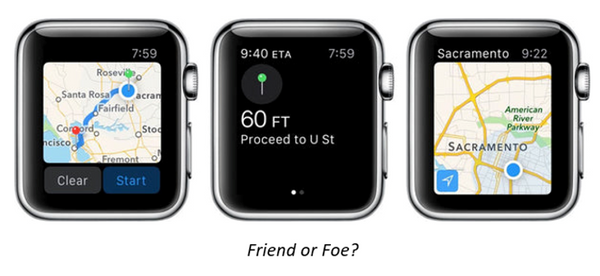
As noted in “CIA Officers and Apple Watches,” “In 2022, Apple sold approximately 50 million smart watches” – but fast forward to 2025, and Apple continues to dominate the market, selling an additional approximately 115 million smart watches and 265 million AirPods (both of which use Bluetooth) since WoE’s article. [17] That's a treasure trove of possible surveillance data to be monetized - and surveillance companies know this.

Some may counter with the valid refrain, “What about smart phones?” However, and as pointed out by WoE, the smart watch is worn on the wrist vs. the smart phone carried in a pocket, which can interfere with features like the phone microphone.
More so, “…smartwatches collect more data than an iPhone, including heart rate, sleep patterns, and even subtle hand movements, which some studies suggest can be used to decipher passwords. Much of this data is processed by third-party apps with varying levels of security. More importantly, unlike a phone, the smartwatch is easily replaced with an analog tool called a watch, which can’t be hacked.” [18] Sound words of advice – and no smart watch means one less vulnerability to be exploited.
Why Does this Matter?
You don’t have to be an intelligence officer for ALPR cameras – especially when accompanied by Bluetooth/RFID sniffers – to pose a concern to your daily life. These devices and their AI-powered software can determine pattern of life analysis for things as basic as what gym you attend, if you go to the gun range, what house of worship you attend, what pro- or anti- protest you attend, and much (so much) more. [19]
The addition of SignalTrace makes the surveillance data collected far more invasive, as it can reveal your network – ie: who your friends are, who you date – due to a decision to wear a smart watch everywhere you travel. While we like to think most law enforcement use powerful tools like these responsibly - and they do - a disturbing spate of abuse cases have been making headlines since 2024. Since that date - and as of early August 2026 - at least 50 separate instances of law enforcement using ALPRs to conduct “romantic stalking” to track romantic partners, former partners, or strangers in whom they were interested have been documented. [20]
Civil rights advocates also warn of ALPR “mission creep,” most recently citing a motorcyclist who was allegedly spotted by a Flock camera holding a cell phone in their left hand and then subsequently received a Georgia State Patrol ticket based on the camera's recording of that incident. This despite a direct quote from Flock's marketing materials states, “What It Is Not: Flock ALPR does not perform facial recognition, does not store biometrics, cannot be queried to find people, and is not used to enforce traffic violations.” [21]

Nor are ALPRs infallible – in early July 2026, a writer for The Drive automotive periodical was accosted by four police vehicles in a suburban Minnesota Kohl’s parking lot for suspicion of grand theft auto. [22] Flock’s algorithm had misread the license plate on the $155k Range Rover he was reviewing:
“’Are you armed?!’ the police officer screamed. ‘Get out of the car!’… After dropping off our Amazon returns, we’d just gotten back in the Range Rover and reversed maybe two feet out of the spot when four cop cars came flying out of nowhere and boxed us in. The officers jumped out and started shouting. It’s a situation that can quickly and frequently turn bad, so as unprepared as I was, I followed their orders, got out with my hands up, and tried to figure out what the hell was happening…And the reason I was ID’ed as a dangerous car thief was a simple data error made 2,000 miles away in California, creating an edge case within an edge case that Flock’s AI camera network was unable to handle. We now live in a surveillance state where cameras mounted on stoplights are tracking our cars, our devices, our pets, and even us…Whether you’ve actually stolen a car or are just rolling down the road having done nothing wrong, like me, once these systems have you in their cross hairs, there’s pretty much only one way it can go. Welcome to the future. It’s scary out there…And the more I’ve sat with the aftermath, the more I’m thinking about how, with a different set of officers in a different city, or a different unsuspecting driver [] who was a little less collected, this could’ve ended so, so much worse. Thank God our kids weren’t with us. I’m not sure if I would’ve been able to react as calmly.”

This wasn’t an isolated case – dozens of innocent motorists had been pulled over, detained at gunpoint, or jailed due to ALPR errors, most of these since 2023. [23]
The Path Forward
Easy – turn off Bluetooth and signals like it whenever you can, regardless of device. Or, better yet don’t use a smart watch. But there exist other devices less easy to turn off, like your car’s TPMS. Still, the fewer devices transmitting electronic signals that can be collected by surveillance devices and exploited, the better.
Are we being alarmist here? Maybe. But if so, we aren’t alone – city governments around the country are slowly starting to reject the invasions of privacy UTS is posing (87 cities so far [24]); law enforcement is too, in some high-profile departments. In mid-July 2026, the Los Angeles Police Department (LAPD) announced the cancelling of its Flock ALPRs over privacy and data ownership issues. [25] In the days after LAPD canceled the contract, an audit [26] by the LAPD Office of the Inspector General disclosed it had found Flock’s ALPR cameras generating 161 false stolen-vehicle alerts over a mere two months — each one ending with officers pulling over an innocent driver. Factoring in 337 alerts which “resulted in the recovery of stolen vehicles,” the LAPD’s cameras carry an error rate of 32.3 percent, effectively giving officers a one-in-three chance at pulling an innocent person over. [27]
Further, a bi-partisan bill is also winding through Congress at present that would end funding for public roads in states that use ALPRs. [28] Related, the U.S. Supreme Court handed down a verdict in late June 2026 that determined law enforcement acquisition of a mobile phone user's digital location history via a "geofence warrant" constitutes a search under the Fourth Amendment. [29]
The Supreme Court recognized individuals possess a reasonable expectation of privacy in their mobile location information, and it’s easy to speculate this could be used to combat Bluetooth and RFID sniffers. [30] In other words, the Supreme Court has now rejected the argument individuals lose privacy rights simply because companies store an individual’s data.

Often, warning about the dangers smart watches pose can feel like yelling into the void – WoE expressed his own frustration in a mid-2025 update to his aforementioned smart watch article – “Sometimes I feel like we are beating a dead camel when we talk about the counterintelligence risks of smartwatches, but this week, yet another world leader was put at risk due to his security detail’s use of Strava, an application and social media platform that allows users to track and share their fitness activity.” [31]
Above shows you don’t have to be a world leader or an intelligence officer – you could be just minding your business with nary a nefarious intent and still be at risk. So go buy a mechanical watch already.
Not that we are biased towards mechanical watches or anything.

1. Watches of Espionage, “Counterintelligence Risks of Smart Watches,” 30/MAY/2023 https://www.watchesofespionage.com/blogs/woe-dispatch/cia-officers-and-apple-watches, accessed mid-July 2026
2. For an in-depth exploration of how ALPR’s work, see Electronic Frontier Foundation’s “Street Level Surveillance: Automated License Plate Readers,” https://sls.eff.org/technologies/automated-license-plate-readers-alprs, accessed mid-July 2026.
3. Flock Safety, “Flock Safety Expands into Drones for Law Enforcement with Acquisition of Aerodome,” 16/OCT/2024 https://www.globenewswire.com/news-release/2024/10/16/2964095/0/en/Flock-Safety-Expands-Into-Drones-for-Law-Enforcement-with-Acquisition-of-Aerodome.html, accessed mid-July 2026.
4. DeFlock, landing page ALPR counter https://deflock.org/, accessed mid-July 2026.
5. As of at least 2020, Italian conglomerate Leonardo was the 12th largest defense contractor in the world by revenue - $22 billion a year as of 2025; headquartered in Rome, it is partially owned by the Italian Government (which holds a 30% stake as its largest shareholder). The conglomerate has previously engaged in business with deposed Syria dictator Bashar al-Asad during the civil war there, and separately had its CEO arrested on corruption charges (which he was later acquitted of); it also has large joint ventures with Israeli and German companies, which raises a slew of potential counter-intelligence risks alone.
6. Leonardo announced it had received its U.S. Patent for SignalTrace in May 2024; BusinessWire, “Leonardo U.S. Cyber and Security Solutions Receives a Patent for their New Electronic Signature Tracking System for Law Enforcement,” 30/MAY/2024 https://www.businesswire.com/news/home/20240530567391/en/Leonardo-US-Cyber-and-Security-Solutions-receives-a-patent-for-their-new-electronic-signature-tracking-system-for-law-enforcement, accessed mid-July 2026.
7. AppleInsider, “Cops Will Soon Upgrade to License Plate Readers that Can Track Your iPhone and AirPods in Public,” 24/JUN/2026 https://appleinsider.com/articles/26/06/24/cops-will-soon-upgrade-to-license-plate-readers-that-can-track-your-iphone-and-airpods-in-public, accessed mid-July 2026.
8. Watches of Espionage, “Counterintelligence Risks of Smart Watches,” 30/MAY/2023 https://www.watchesofespionage.com/blogs/woe-dispatch/cia-officers-and-apple-watches, accessed mid-July 2026.
9. The Mozilla Foundation found that at least 25 major vehicle manufactures collect and share deeply personal data, including sexual activity, facial expressions, and genetic and health information, calling it a “privacy nightmare on wheels”; Mozilla Foundation, “It’s Official: Cars Are the Worst Product Category We Have Ever Reviewed for Privacy,” 06/SEP/2026 https://www.mozillafoundation.org/en/privacynotincluded/articles/its-official-cars-are-the-worst-product-category-we-have-ever-reviewed-for-privacy/, accessed mid-July 2026.
10. In 2024, the U.S. Cybersecurity and Infrastructure Security Agency (CISA) warned of multiple vulnerabilities affecting Motorola Solutions’ Vigilant License Plate Reader Manager. Exploitation of flaws could allow attackers to damper with devices, access sensitive information and credentials, or disrupt system operations – imagine if the system were hacked by a hostile foreign intelligence service (or terrorists) to identify everyone entering the areas of CIA or NSA headquarters; CISA, “Motorola Solutions Vigilant License Plate Readers,” 13/JUN/2024 https://www.cisa.gov/news-events/ics-advisories/icsa-24-165-19, accessed mid-July 2026.
11. American Civil Liberties Union, “Fight Creepy ALPR Cameras,” 10/JUL/2026 https://www.aclu.org/campaigns-initiatives/get-the-flock-out and American Rifleman, “New Digital Surveillance Tools Threaten Gun Owner Privacy,” 12/JUL/2026 https://www.americanrifleman.org/content/new-digital-surveillance-tools-threaten-gun-owner-privacy/, both accessed mid-July 2026.
12. 404 Media, “This Company Will Add Phone, AirPod, and Smartwatch Trackers to License Plate Readers,” 08/JUN/2026. https://www.404media.co/this-company-will-add-phone-airpod-and-smartwatch-trackers-to-license-plate-readers/, accessed mid-July 2026.
13. Ibid.
14. Ibid.
15. The Drive, “Cops Are Already Using License Plate Readers to Stalk People,” 23/JUN/2026 https://www.thedrive.com/news/cops-are-already-using-license-plate-readers-to-stalk-people, both accessed in mid-July 2026.
16. 404 Media, “License Plate Reader Company Flock is Building a Massive People Lookup Tool, Leak Shows,” 14/MAY/2025 https://www.404media.co/license-plate-reader-company-flock-is-building-a-massive-people-lookup-tool-leak-shows/, accessed mid-July 2026
17. Business of Apps, “Apple Statistics,” 26/FEB/2026 https://www.businessofapps.com/data/apple-statistics/, accessed mid-July 2026.
18. Watches of Espionage, “Smartwatch Hack: Strava Exposes Swedish PM's Security Detail,” 10/JUL/2026. https://www.watchesofespionage.com/blogs/woe-dispatch/swedish-prime-minister-smartwatch-security-address-leak, accessed mid-July 2026.
19. Electronic Frontier Foundation, “How Cops Are Using Flock Safety's ALPR Network to Surveil Protesters and Activists,” 20/NOV/2025 https://www.eff.org/deeplinks/2025/11/how-cops-are-using-flock-safetys-alpr-network-surveil-protesters-and-activists, accessed mid-July 2026.
20. Washington Post, "How Rogue Officers Turned a Nationwide Camera Network into a Tool for Stalking," 02/AUG/2026 https://www.washingtonpost.com/technology/2026/08/02/how-police-officers-used-vast-network-cameras-spy-their-exes/, accessed ub easly August 2026; Institute for Justice, “Police Have Reportedly Used License Plate Readers to Stalk Romantic Interests at Least 22 Times in Recent Years,” 27/APR/2026 https://ij.org/police-have-reportedly-used-license-plate-readers-to-stalk-romantic-interests-at-least-14-times-in-recent-years/ and The Drive, “Cops Are Already Using License Plate Readers to Stalk People,” 23/JUN/2026 https://www.thedrive.com/news/cops-are-already-using-license-plate-readers-to-stalk-people, both accessed in mid-July 2026.
21. Electronic Frontier Foundation, “Traffic Violation! License Plate Reader Mission Creep Is Already Here,” 26/MAR/2026 https://www.eff.org/deeplinks/2026/03/traffic-violation-license-plate-reader-mission-creep-already-here, accessed in mid-July 2026.
22. The Drive, “How Flock Cameras Wrongly Tracked Me for Days Over ‘Stolen’ Plates and Sent Police After Me,” 08/JUL/2026 https://www.thedrive.com/news/how-flock-cameras-wrongly-tracked-me-for-days-over-stolen-plates-and-sent-police-after-me, accessed mid-July 2026.
23. Institute for Justice, “Dozens of Innocent Motorists Have Been Pulled Over, Detained at Gunpoint, or Jailed Due to AI License Plate Camera Errors,” 01/JUL/2026 https://ij.org/dozens-of-innocent-motorists-have-been-pulled-over-detained-at-gunpoint-or-jailed-due-to-ai-license-plate-camera-errors/, accessed mid-July 2026.
24. DeFlock, “City Council Rejections,” https://deflock.org/council#wins, accessed mid-July 2026.
25. The U.S.’s third largest police department, the LAPD, cited “serious concerns” around civil liberties and privacy as the rationale for allowing the three-year Flock contract to lapse, "This contract is not being renewed because of serious concerns around civil liberties and civil rights issues, particularly around privacy and the data that is being collected from these cameras," Dean Gialamas, the department's chief information officer noted in a press statement after the decision was made public, Los Angeles Times, “LAPD Suspends Use of Flock Surveillance Cameras over Privacy Issues,” 11/JUL/2026 https://www.latimes.com/california/story/2026-07-11/lapd-suspends-use-of-flock-surveillance-cameras-over-privacy-issues, accessed mid-July 2026.
26. LAPD Office of Inspector General, “Review of Los Angeles Police Department Automatic License Plate Reader System and Use in the Field,” 10/JUL/2026 https://www.lapdpolicecom.lacity.org/071426/BPC_26-184x.pdf, accessed mid-July 2026.
27. 404 Media, “LAPD Regularly Pulled Over Innocent People Because License Plate Readers Flagged Their Cars as Stolen,” 13/JUL/2026 https://www.404media.co/lapd-regularly-pulled-over-innocent-people-because-license-plate-readers-flagged-their-cars-as-stolen/, accessed mid-July 2026
28. WIRED, “A Bipartisan Amendment Would End Police License Plate Tracking Nationwide,” 28/MAY/2026 https://www.wired.com/story/a-bipartisan-amendment-would-end-police-license-plate-tracking-nationwide/, accessed mid-July 2026.
29. Supreme Court of the United States, “Chatrie v. United States, 609 U. S. ____ (2026),” 29/JUN/2026 https://www.supremecourt.gov/opinions/25pdf/25-112_0am4.pdf, accessed mid-July 2026.
30. The legal issue is public policy frequently treats each input separate – a license plate image, time stamp, device signal, location record, etc.
31. Watches of Espionage, “Smartwatch Hack: Strava Exposes Swedish PM's Security Detail,” 10/JUL/2026. https://www.watchesofespionage.com/blogs/woe-dispatch/swedish-prime-minister-smartwatch-security-address-leak, accessed mid-July 2026.